
Body Lotion vs Body Cream: Why Lightweight Hydration Works Better for Daily Use
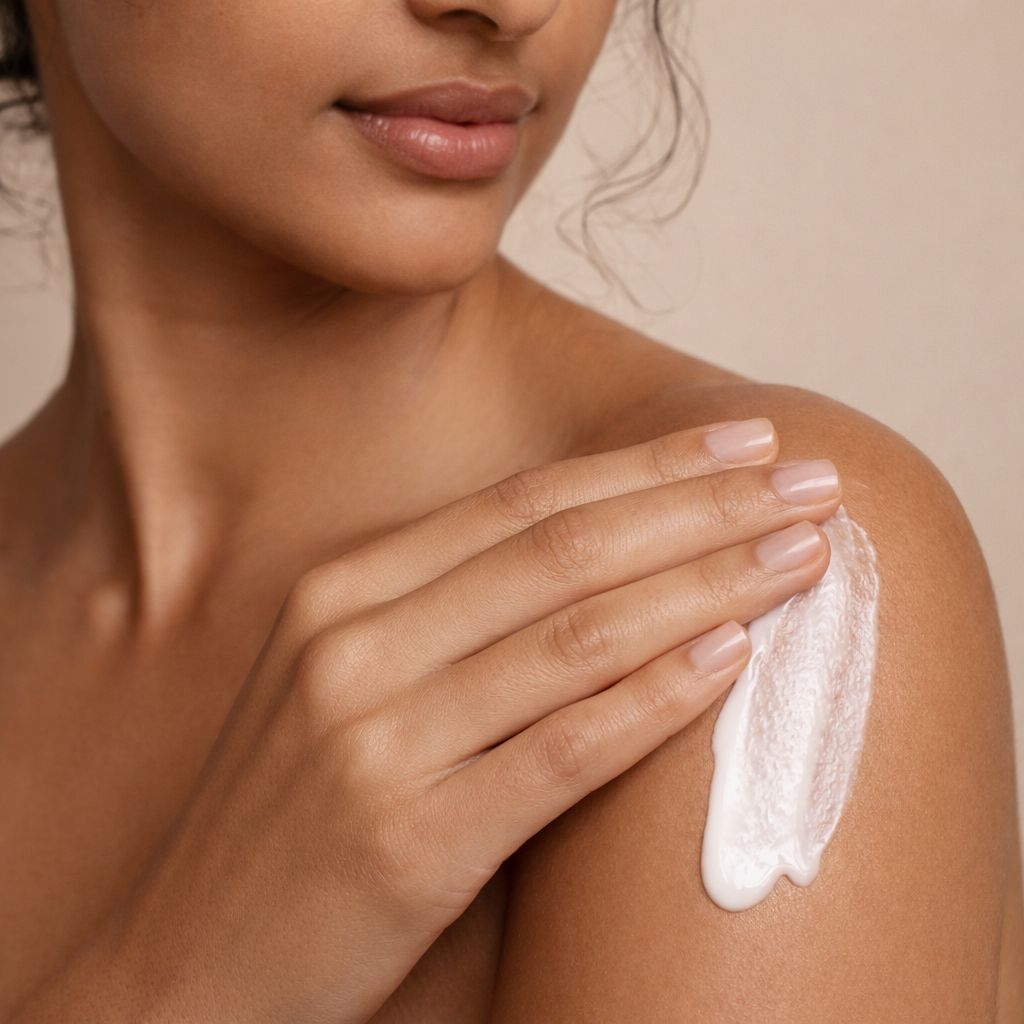
Walk into any skincare aisle - or scroll through any beauty brand's website - and you'll find body lotions and body creams sitting right next to each other, often making very similar promises. Soft skin. Deep hydration. Lasting comfort.
So what's actually the difference? And more practically: which one should you be reaching for every morning before you walk out the door?
The answer sits in the biology of your skin - and once you understand it, the choice becomes straightforward.
What Your Skin Is Actually Doing
Before getting into what these products do, it helps to understand what the skin itself is doing - because your skin is not a passive surface waiting to be moisturised. It's an active, living organ in a constant state of maintenance.
The outermost layer of the skin - the stratum corneum - is a tightly organised structure of dead skin cells embedded in a matrix of lipids: ceramides, fatty acids, and cholesterol. Think of it like a brick wall. The cells are the bricks. The lipids are the mortar. When this barrier is intact, it does two things simultaneously: it keeps water inside the skin and keeps irritants, pollutants, and bacteria out.
When the barrier is compromised - by harsh cleansers, over-exfoliation, sun exposure, dehydration, or simply neglect - it becomes porous. Water escapes through the gaps. External stressors enter more easily. The result is skin that looks and feels worse: tight, dull, rough, reactive, and persistently dry no matter how much product you apply.
This is the biological context that makes the lotion-versus-cream question worth understanding properly. Every moisturiser you use is interacting with this system. The question is whether it's helping rebuild and maintain it - or just temporarily coating the surface.
What Is the Difference Between Body Lotion and Body Cream?
The difference comes down to formulation - specifically, the ratio of water to oil and the concentration of occlusive ingredients.
Body lotions are emulsions with a higher water-to-oil ratio. They're fluid, lightweight, and designed to absorb quickly into the skin rather than sit on top of it. Because they're less dense, they spread easily over large surface areas and are typically dry to the touch within 60 to 90 seconds of application.
Body creams are significantly richer formulations with a much higher oil and emollient content relative to water. They absorb slowly, create a more pronounced occlusive layer on the skin surface, and are designed to deliver concentrated nourishment to very dry or compromised areas.
Both moisturise. Both have a legitimate place in a complete bodycare routine. But they are solving for different things - and using the wrong one at the wrong time reduces the efficacy of both.
Is Body Lotion and Moisturiser the Same Thing?
Not exactly - and the distinction is worth understanding before choosing any product.
"Moisturiser" is a functional category, not a product type. It describes anything that increases or maintains the skin's moisture content. Body lotions, body creams, body butters, body oils, and even some gels can all be moisturisers - depending on how they're formulated.
What separates them is the mechanism. There are three distinct ways a formula can moisturise the skin:
Humectants draw water into the skin. Ingredients like glycerin, aloe vera, hyaluronic acid (sodium hyaluronate), urea, betaine, and sodium PCA are hygroscopic - they attract water molecules from the environment and from the deeper layers of the skin and pull them up toward the surface. They create that immediate soft, plump feeling within seconds of application. But humectants need to be sealed in - in very dry or air-conditioned environments, an unsupported humectant layer can eventually draw moisture out of the skin rather than in.
Emollients fill and smooth. Plant oils and fatty acids - sweet almond oil, coconut oil, shea butter - fill the gaps between skin cells, soften rough texture, and deliver the fatty acids that the skin barrier's lipid matrix is made of. Emollients don't just make skin feel smooth in the moment; applied consistently, they contribute to the structural repair of the barrier over time.
Occlusives seal and protect. These ingredients form a physical film on the skin surface that slows transepidermal water loss - the passive evaporation of moisture from the skin throughout the day. Heavier occlusives like petroleum jelly are found in thick creams and ointments. Lighter occlusives - shea butter, cocoa butter, caprylic/capric triglyceride - are used in lotion formulations to provide the sealing function without the weight.
A well-formulated moisturiser contains all three working together. The ratio of these ingredient types - not the marketing copy on the label - determines what the product actually does and what kind of skin it's best suited for.
Body Lotion vs Body Cream: The Real Comparison
Body Lotion Body Cream
|
Texture |
Light, fluid |
Thick, dense |
|
Absorption |
Fast (60–90 seconds) |
Slow (several minutes) |
|
Finish |
Dry or near-dry |
Can feel tacky |
|
Best for |
Daily use, all skin types |
Very dry or cracked skin, targeted areas |
|
Best time to use |
Morning, post-shower |
Night, or as a spot treatment |
|
Body coverage |
Full body |
Elbows, knees, heels |
|
Climate suitability |
All seasons, all climates |
Better in cold, dry conditions |
So Is Lotion or Body Cream Better?
Neither is universally better. But for most people using bodycare as a daily habit - not an occasional treatment - the case for a lightweight lotion is compelling.
It fits into real life. If you're applying bodycare before getting dressed and heading out, you don't have time to wait for a thick cream to absorb. A well-formulated lotion gives you effective hydration in under two minutes - no greasy residue on your clothes, no sticky feeling mid-commute. For anyone whose morning is already a negotiation between sleep and punctuality, this matters.
It works across skin types and seasons. Body creams can feel heavy and suffocating in warm or humid weather - and most of India is warm and humid for the majority of the year. Lotions are easier to adjust seasonally: apply more in winter, use less in summer, without switching products or disrupting a routine that's already working.
It covers large surface areas efficiently. The arms, legs, and torso represent a significant amount of skin. Creams require more product, more time to spread, and often leave uneven coverage over large areas. Lotions apply uniformly with less effort - which matters when you're trying to build a daily habit rather than a weekly ritual.
Lightweight texture doesn't mean weak formula. This is the most persistent misconception about body lotions. Lighter texture is not a sign of lower efficacy - it's a sign of a different formulation approach. A well-built lotion can carry meaningful concentrations of barrier-supporting actives, brightening ingredients, and SPF protection in a vehicle the skin can actually absorb efficiently. In many cases, the lotion delivers more effective ingredient penetration than the cream, not less.
When cream is the right choice: Severely dry, cracked, or compromised skin - particularly on hands, heels, or elbows - benefits from the heavier occlusive seal that creams provide, especially applied overnight when the skin is in repair mode. The mistake isn't using a cream. The mistake is using it as your all-over daily moisturiser when your skin, climate, and routine would be better served by something it can actually absorb.
The Indian Climate Argument for Lightweight Lotions
This one doesn't get talked about enough.
Most bodycare content is produced for temperate climates - places where cold, dry air is the dominant threat to skin hydration. The conventional wisdom to reach for rich, thick creams makes biological sense there. It doesn't translate to most of India.
If you're in Mumbai, Pune, Chennai, Bengaluru, or any region that sees high humidity for significant parts of the year, ambient moisture in the air means the skin's humectant system is already functioning relatively well. What the skin needs isn't a heavy occlusive barrier on top - it needs active hydration that absorbs efficiently and doesn't trap heat or sweat against the surface.
Heavy creams in humid conditions sit on the skin rather than absorbing into it. They feel uncomfortable, interfere with the body's natural temperature regulation, and often end up on clothing rather than in the skin. The result is that people stop using them - which means the skin gets no benefit at all.
A lightweight lotion absorbs before the skin has time to resist it. It works with the climate rather than against it. And because it's genuinely comfortable to wear every day, it gets used every day - which is the only way any moisturiser produces lasting results.
How Moisturising Actually Works: The Three-Layer System
A moisturiser that contains all three ingredient types - humectants, emollients, and mild occlusives - delivers what can be thought of as layered hydration. Each mechanism handles a different dimension of moisture management:
● Humectants create the initial surge of moisture to the skin surface
● Emollients fill the structural gaps in the barrier and soften texture
● Mild occlusives seal the surface so the moisture delivered by the humectants doesn't immediately evaporate
This is why the timing of application matters. Applying a lotion to slightly damp skin post-shower gives the humectants residual moisture to work with immediately. The emollients lock into the surface. The mild occlusives seal everything in. The result is hydration that compounds over repeated daily use - not just the temporary softness that fades within an hour.
The skin's moisture barrier doesn't rebuild in a single application. Structural improvement in barrier integrity from consistent moisturising typically becomes perceptible around weeks two to four of daily use and compounds significantly by week six to eight. This is how skin biology works - and it's the only timeframe worth measuring results against.
How to Use Body Lotion (and How Much)
When to apply: Immediately post-shower, while the skin is still slightly damp. This is when the barrier is most receptive and humectants have surface moisture to bind to.
How much to use: A palm-sized amount is right for both legs; a slightly smaller amount for the arms. If the lotion is absorbing easily and leaving no residue, the quantity is correct. If it's sitting on the surface or balling up, either reduce the amount or reconsider the formula.
How to layer lotion and cream together: Apply lotion first on damp skin and allow it to fully absorb - this takes about 60 seconds with a well-formulated product. Follow with a small amount of cream only on targeted dry areas: elbows, knees, heels, or anywhere chronically prone to dryness. The lotion addresses overall hydration; the cream provides concentrated barrier support exactly where the skin needs it most.
What to Look for in a Daily Body Lotion
If you're using something every day, the formula earns more scrutiny than most people give it. Texture and fragrance are immediate - but the ingredients doing the actual work are what matter over time.
Humectants at meaningful concentrations. Glycerin is the most well-researched humectant in skincare - it's hygroscopic, draws water into the skin, and has decades of clinical data behind it. It should appear high on the ingredient list, not buried after fragrance. Other effective humectants include sodium hyaluronate, urea, betaine, sodium PCA, and aloe vera. A formula with multiple humectants working at different molecular weights hydrates more effectively than one relying on a single ingredient.
Emollients that support barrier lipids. Plant oils and butters - shea, sweet almond, coconut, cocoa - provide the fatty acids that structurally resemble the skin barrier's own lipid matrix. They fill the spaces between skin cells, soften rough texture, and over consistent use, contribute to barrier repair rather than just temporary smoothness. Look for them in the top half of the ingredient list; if they appear at the very end, the concentration is likely too low to be meaningful.
Niacinamide - if the percentage is there. Niacinamide (Vitamin B3) has robust clinical evidence for improving skin barrier function through ceramide synthesis, reducing uneven pigmentation by limiting melanin transfer, and refining surface texture. The catch: most of the evidence is built on concentrations of 2–5% for the face. For body lotions, 1% is a reasonable starting point given the larger surface area and more tolerant body skin, but it needs to be present at a real concentration - not a trace inclusion for label value.
Vitamin C - only if the form is stable. Vitamin C is effective for brightening and antioxidant protection, but it's notoriously unstable. L-Ascorbic acid, the most potent form, oxidises rapidly in water-based formulations and becomes ineffective before the product is even finished. More stable derivatives - 3-O-Ethyl Ascorbic Acid, Ascorbyl Glucoside, Sodium Ascorbyl Phosphate - are better suited to body lotion formats. If Vitamin C is on the label, look for which form it actually is.
SPF - with appropriate expectations. A body lotion with SPF is genuinely useful for daily, casual exposure - commuting, time near windows, short outdoor periods. SPF 15 to 18 in a body lotion is not a substitute for a dedicated sunscreen during extended outdoor activity, and any brand that suggests otherwise is overstating. But for the arms and legs - which most people apply no sun protection to, ever - even a basic daily SPF represents a meaningful improvement over nothing.
What to be honest about: No body lotion reverses sun damage, eliminates stretch marks, or produces the kind of results a product description might imply. What consistent, well-formulated daily moisturising demonstrably does: improves skin barrier integrity over time, reduces transepidermal water loss, softens rough texture, and - with the right actives applied over multiple skin turnover cycles (approximately 28 days each) - contributes to more even tone and better overall skin resilience. That's genuinely useful. It just takes longer than the packaging suggests.
Wave's Approach: Two Lotions, One Clear Purpose
Both Wave body lotions are formulated for daily use as the non-negotiable starting point - lightweight enough to actually wear every day, and built with actives at concentrations that justify the habit.
Glow & Protect Body Lotion carries Vitamin C (3-O-Ethyl Ascorbic Acid), Niacinamide, Aloe Vera, Phospholipids, and SPF 18. Designed for the morning - absorbs in seconds, leaves no residue, and gives skin a natural brightness that doesn't come from shimmer. Built to defend against UV and dullness while actively improving tone with consistent use.
Hydrate & Protect Body Lotion carries 1% Niacinamide, a layered humectant system (Aloe Vera, Sodium Hyaluronate, Betaine, Urea, Sodium PCA), Shea Butter, Sweet Almond Oil, and SPF 15. Built for skin that feels dry, tight, or stripped - the kind of dryness that builds up over days, not hours. It absorbs with a softness you notice immediately, and holds through the day.
Neither is a quick-fix treatment. Both are formulated to become a permanent part of a daily routine - not because they feel luxurious in the moment, but because they actually do what they're designed to do over time.
The Bottom Line
Body lotions and body creams are different tools built for different jobs. A cream's heavier, more occlusive formulation makes sense for severely compromised skin or as a targeted overnight treatment on specific dry areas. For consistent, full-body daily use - especially in India's climate - a lightweight lotion with meaningful active concentrations is the more practical, more effective, and more sustainable choice.
But here's the thing no one says plainly enough: the best moisturiser is the one you actually use every day. Not the richest one on your shelf. Not the one with the most impressive ingredient list. The one that absorbs fast enough that you don't skip it when you're running late, that feels good enough that you don't resent it, that works well enough that you notice when you forget.
The skin doesn't rebuild its moisture barrier in one application. It does it through showing up - daily, consistently, with the right formula on skin that's ready to receive it. That's the biology. And it's also just the most honest answer to which is better.
Explore the Glow & Protect Body Lotion and Hydrate & Protect Body Lotion from Wave - formulated for daily use, not just the days you remember.
Frequently Asked Questions
What is the difference between body lotion and body cream? Body lotion has a higher water content, making it lighter and faster-absorbing - better suited for daily full-body use across all skin types. Body cream is denser, with a higher oil and occlusive content, designed to deliver concentrated moisture to very dry or compromised areas. Both moisturise, but through different mechanisms and at different intensities.
Is body lotion and moisturiser the same thing? Not exactly. "Moisturiser" is a broad functional category that includes lotions, creams, butters, oils, and gels. A body lotion is always a moisturiser, but the category is wider than the product type. The distinction lies in formulation, texture, and how each product delivers hydration to the skin.
Which is better - body lotion or body cream? For most people using bodycare daily, a lightweight body lotion is the more practical choice: it absorbs faster, suits more skin types and climates, and covers large areas without discomfort. Body cream is better used as a targeted overnight treatment on chronically dry areas - heels, elbows, knees - rather than as an all-over daily product.
How much body lotion should I use? A palm-sized amount covers both legs; a slightly smaller amount handles both arms. Apply on slightly damp skin immediately post-shower for best absorption. If the product isn't absorbing or is leaving residue, you've applied too much - or the formula isn't suited to your skin type.
How do you use body cream and body lotion together? Apply lotion first on damp skin and allow it to absorb fully - approximately 60 seconds. Then follow with a small amount of cream only on targeted dry areas. The lotion handles overall hydration; the cream adds concentrated barrier support where the skin needs it most.
What's better for Indian skin - body lotion or body cream? For most of India's climate - high humidity, year-round warmth, and a consistently high UV index - a lightweight lotion is the more appropriate daily choice. Heavy creams can feel uncomfortable in humid conditions, often sit on the skin surface rather than absorbing, and are rarely necessary unless the skin is severely dry or compromised. A lotion with SPF built in also addresses India's UV exposure in a format that's actually wearable every day.


