Why a Glycolic & Lactic Acid Body Spray Is the Secret to Brighter, Clearer Skin
Let's be honest — most of us are doing a lot more for our faces than we are for the rest of our skin.
Serums, toners, actives. The face gets the full routine. Meanwhile, the body gets a quick lather in the shower and maybe some lotion on the way out the door. And then we wonder why our arms still have those tiny bumps, why the tan from that beach trip is still sitting on our shoulders three months later, or why no amount of scrubbing seems to make the skin on our thighs actually smooth.
Here's what's missing: exfoliating actives. For your body.
Specifically, Glycolic Acid and Lactic Acid - two AHAs (alpha hydroxy acids) that have quietly become the most effective ingredients for transforming body skin. And the easiest, most mess-free way to get them? An AHA body spray that you literally just spritz on and forget.
Here's everything you need to know.
What Do Glycolic Acid and Lactic Acid Actually Do for Skin?
Before we get into how to use them, it's worth understanding why these two actives are such a big deal. Once you get it, the results will make a lot more sense.
Glycolic Acid is the workhorse of the AHA family. It has the smallest molecule size, which means it penetrates quickly and gets to work fast. It dissolves the bonds between dead skin cells, essentially breaking down the "glue" that keeps dull, rough, tanned cells stuck to the surface. Once those bonds are broken, that dead layer sheds and reveals the fresher, brighter, smoother skin underneath. This is why glycolic acid for body skin is so effective for tan removal, dullness, uneven pigmentation, and rough texture. It doesn't create micro tears. It dissolves. And that's a meaningfully different and more effective approach!
Lactic Acid works in a similar way but with a gentler touch. Its larger molecule size means it works more slowly and stays closer to the surface, making it ideal for sensitive or reactive skin. But lactic acid brings something extra that glycolic doesn't: it's also a humectant, meaning it pulls moisture into the skin as it exfoliates. So you're resurfacing and hydrating simultaneously. That's how lactic acid works on skin - it multitasks in a way most exfoliants simply can't.
Used together at the right concentrations, they complement each other perfectly. Glycolic goes deeper and acts faster. Lactic is gentler and more hydrating. The combination delivers results that neither achieves as effectively alone.
Five Skin Concerns a Glycolic + Lactic Acid Body Spray Actually Fixes
1. Tan and Dullness
Sun exposure, pollution, and general city life cause dead, pigmented cells to build up on the skin's surface. This is what makes your complexion look flat, tired, or patchy - especially on your arms, legs, and back. AHA’s for body pigmentation work by clearing this surface buildup and prompting cellular turnover, so fresher, more evenly pigmented skin replaces it over time. For that post-beach tan that refuses to budge no matter how much you scrub, an AHA spray used consistently is the answer scrubs can never quite be.
2. Rough Texture, KP, and Strawberry Skin
Keratosis pilaris - those small, persistent bumps on the backs of your arms and thighs is caused by a buildup of keratin inside hair follicles. Strawberry skin is a similar problem: enlarged or clogged pores that give the legs a dotted, rough appearance after waxing or shaving. Both are essentially congestion and texture problems. Glycolic and lactic acids gently dissolve the buildup causing both, gradually smoothing the skin without any abrasive rubbing that can worsen irritation or make things redder.
3. Body Acne and Ingrown Hairs
Body acne and ingrown hairs share the same root cause - clogged follicles. When dead cells and debris block pores, breakouts form. When shaved or waxed hair can't break through the surface, it curls back and becomes ingrown, leading to those painful, inflamed bumps in all the wrong places. Regular use of AHA’s keeps the follicle entrance clear, meaning fewer blockages, fewer breakouts, and significantly fewer ingrown hair - especially in friction-prone areas like underarms, the bikini line, and inner thighs.
4. Uneven Tone and Pigmentation
Dark patches from old breakouts, friction, post-waxing marks, or sun damage are stubborn because the pigment sits deep in the epidermis. Glycolic and lactic acid accelerates cellular turnover, which gradually surfaces fresher, more evenly pigmented cells and fades discolouration over time. When used consistently alongside Niacinamide, which actively interrupts melanin transfer - the results compound beautifully.
5. Body Odour
This one surprises people, but it's completely logical once you understand it. Body odour isn't caused by sweat itself - it's caused by bacteria breaking down sweat on the skin's surface. Dead skin buildup in areas like the underarms and groin creates the perfect environment for this bacterial activity. By keeping the skin surface clear and follicles clean, a regular AHA routine reduces the bacterial load and keeps those areas genuinely fresher for longer.
How to Use AHA’s on the Body the Right Way
This is where people get confused because we've been conditioned to think of acids as complicated, high-maintenance face products with long waiting times and elaborate layering rules. For the body, it's genuinely much simpler.
Step 1: Shower and cleanse normally. Pat skin dry - properly dry, not damp.
Step 2: Spray directly onto the areas you're targeting. Arms, legs, underarms, thighs, bikini line, back (wherever you need it.)
Step 3: Let it absorb for 10–15 seconds. No scrubbing. No rinsing, no waiting around.
Step 4: Follow with your body lotion on slightly damp skin to lock in moisture.
That's your whole routine. Under a minute. Apply your AHA spray first on dry skin, let it absorb briefly, then apply your lotion. Never blend them in your palm or layer them simultaneously - that dilutes the acid and reduces its effectiveness.
How Often Should You Use AHA Body Spray?
This is the question we get asked the most, and the honest answer is: it depends on where you're starting from.
New to AHA’s? Start using 2-3 times a week. This gives your skin time to adjust without the risk of over-exfoliating or causing sensitivity. Most people notice a visible improvement in texture within the first 7-10 days - smoother arms, less rough bumps, slightly brighter tone. Start there, then build.
Once your skin is comfortable: You can move to daily use. Glycolic and lactic acid can be used daily on the body for most skin types - body skin is thicker and less sensitive than facial skin, and it tolerates regular active use well.
One rule that applies no matter how often you use it: always follow with SPF on any exposed skin during the day. AHA’s make the skin more sun-sensitive. Skipping SPF while using a AHA’s is the single fastest way to undo all the brightening work you've done.
What Not to Use with AHA’s
The internet makes this sound scarier than it is. Here's the straightforward version.
Avoid layering these on the same application:
Retinol - both are powerful cell-turnover accelerators. Using them together on the same day can cause excessive dryness and irritation. Keep retinol for the evenings and your acid spray for the mornings, or alternate days entirely.
Other physical exfoliants - don't use a body scrub on the same day as your AHA spray. You're doubling up on exfoliation and your skin will get irritated, not smoother. Pick one per day.
What you absolutely should use with glycolic acid:
Niacinamide - the perfect partner. It calms any residual sensitivity from exfoliation, actively reduces pigmentation, and strengthens the skin barrier. Using a body lotion with Niacinamide right after your acid spray is one of the most effective combinations in body care.
A good moisturising body lotion - always follow your acid spray with one. Exfoliation without moisturisation leads to dry, reactive skin. The lotion seals in the results.
SPF - every single morning, without exception.
Meet the Wave Triple Action Exfoliating Mist
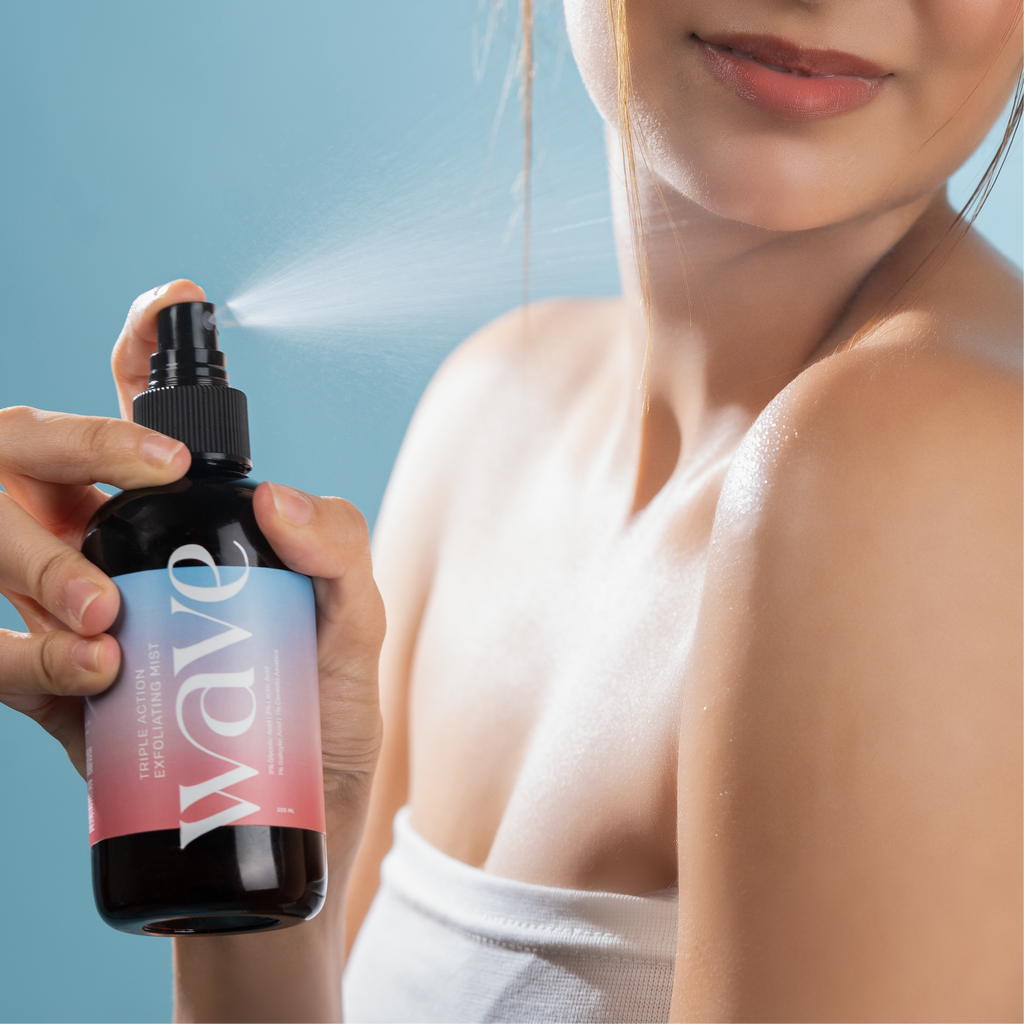
Everything we've talked about - the right actives, the right concentrations, the right supporting cast of ingredients, the right format for real life? That is exactly what the Wave Triple Action Exfoliating Mist was formulated around.
It's a leave-on body spray powered by 3% Glycolic Acid + 3% Lactic Acid - a dual AHA complex that targets dullness, tan, rough texture, uneven tone, and surface congestion all at once. And because body skin problems are rarely just surface-level, it also contains 1% Salicylic Acid (BHA) - a pore-deep exfoliant that works inside the follicle to dissolve the oil and debris that causes strawberry skin, body acne, and ingrown hairs. Glycolic and Lactic resurface from the outside. Salicylic clears from within. Together, they cover every layer of the problem.
But what makes this mist genuinely stand out is what surrounds the actives.
Centella Asiatica (1%) calms redness and repairs the skin barrier after acid contact - so you get effective exfoliation without irritation or stinging. Aloe Vera soothes and instantly hydrates. Niacinamide reduces pigmentation, evens tone, and protects the barrier against daily pollution and friction. A HydraBoost Complex ensures that while the acids are resurfacing, the skin is being actively replenished, not stripped dry.
It's also Clinically Tested, Dermatologically Tested, and Certified Safe for Sensitive Skin - so whether your skin is reactive, freshly waxed, or prone to bumps, you can use it with confidence. In an 8-week consumer study with 20 participants:
- 96% reported noticeably smoother, softer skin
- 94% saw brighter, more even-looking skin
- 92% agreed it cleared trapped impurities and reduced congestion
And the format does a lot of the heavy lifting here. A lightweight spray that absorbs in 10–15 seconds, no rinsing, no residue. The whole step takes under 30 seconds. For most people, that's the difference between actually doing it every day and not doing it at all.
Your Simple Glycolic + Lactic Acid Body Routine
| Step | What to Do | Wave Product |
|---|---|---|
| In the shower | Cleanse with a barrier-friendly body wash | Triple Butter Therapy Cream Body Wash / Five Oil Therapy Shower Gel |
| Post-shower, dry skin | Spray the acid treatment, let absorb 10–15 seconds | Triple Action Exfoliating Mist |
| Damp skin | Apply body lotion to seal in hydration | Glow & Protect / Hydrate & Protect Body Lotion |
| Every morning | Ensure SPF is in your lotion or apply separately | Glow & Protect Body Lotion (SPF 18) |
```
The Bottom Line
Glycolic acid and lactic acid aren't just face ingredients that got accidentally popular. They're the most impactful upgrade you can make to your body care routine - and the reason most people aren't seeing results from their current routine is simply that they haven't added this step yet.
Body skin deals with the same pollution, the same UV exposure, the same sweat, friction, and humidity as facial skin, often more of it. And it rarely gets the actives it needs to genuinely renew itself. A weekly scrub doesn't cut it. A moisturiser alone can't.
But a glycolic and lactic acid body spray that works in 30 seconds, is gentle enough for daily use, tackles five different concerns at once, and is backed by clinical testing? That's the step your routine has been missing.
Give it four weeks. Your skin will show you the difference.
Ready to try it? Shop the Triple Action Exfoliating Mist → Clinically Tested | Dermatologically Tested | Suitable for Sensitive Skin |